
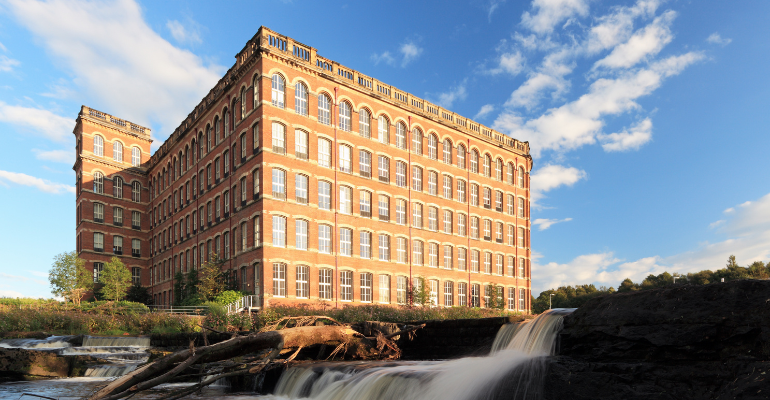
Can the UK's iconic derelict buildings be saved? What developers need to know about restoring listed landmarks.
When you pass an empty hotel, mill, bank or townhouse, do you see a building beyond repair or the beginnings of something new?
Throughout the UK, many distinctive buildings have been left behind as industries, workplaces and local needs have changed. Some have fallen into serious disrepair. Others are still standing strong but need a clear plan and significant investment before they can be used again.
For developers considering derelict buildings for sale in the UK, that can create a real opportunity. With the right expertise and funding, an overlooked property can become new homes, thriving businesses or a destination people are proud to visit.
Why do iconic buildings become derelict?
Buildings often become derelict because they lose the purpose they were originally built for, and finding a workable new use takes time, money and careful planning.
A mill may close when its industry disappears. An office can become empty as the way people work changes. A hotel or bank may no longer meet modern expectations without major renovation.
It also helps to be familiar with the language used around these properties:
- An empty or vacant building has no current occupier, but it may still be usable.
- An abandoned building has generally been left without active use or regular maintenance.
- A derelict building is usually in serious disrepair or needs substantial work before it can be used again.
- A heritage asset at risk is a protected site identified through an official heritage assessment.
The longer a building sits empty, the harder it can be to save. A leaking roof can quickly lead to damp and structural damage. Vandalism, theft and a lack of heating or ventilation can make things even worse.
In many cases, listed buildings bring another layer of complexity. A developer may need listed building consent, a formal approval for work that could affect the building’s special character. Conservation-area rules, ownership issues and uncertain planning outcomes can also slow the project down.
Funding can be another hurdle. A conventional mortgage for an uninhabitable property may be difficult to secure if the building cannot be occupied or valued in the usual way.
Three iconic derelict buildings being brought back to life
Adaptive reuse simply means giving an existing building a new and practical purpose instead of leaving it empty or knocking it down. These three projects demonstrate how that can work.
The former Park Hotel, Preston: from derelict landmark to destination
The former Park Hotel is a Grade II listed landmark close to Preston city centre. After most recently serving as council offices, it had stood vacant since 2011 and fallen into disrepair.
Heaton Group had a vision of a different future for it. The developer plans to turn the building into the 92-room Farington Hotel, with a gym, spa and restaurant. The wider Farington Square scheme is also set to include nine supported-living apartments and 239 residential apartments.
Before any of that could happen, the group needed to move quickly to buy the council-owned building and surrounding land. Together provided the commercial bridging finance needed to secure the site.
The first stage of the former Park Hotel regeneration is focused on making the building watertight. That may not sound like the most exciting part of the project, but it’s an important one. Stopping further damage gives the wider plans (and the building itself) a stronger foundation.
It also shows how a bridging loan for derelict property can help with both a time-sensitive purchase and the urgent work needed to protect a building.
Eckersley Mill, Wigan: industrial heritage becomes The Cotton Works
At its peak, Eckersley Mill employed more than 3,000 people and sat at the heart of Wigan’s cotton industry.
When that industry closed, the Grade II listed Victorian buildings went through several different uses before eventually being abandoned. Heaton Group saw the potential to give the site a major new role in the community.
Its vision for The Cotton Works is a phased development bringing together homes, offices, hospitality and leisure space.
Together provided finance to secure the mill complex in 2021, then supported the scheme with further funding as it reached key milestones.
Phase one transformed Mill One, which dates back to 1884, into a five-storey hospitality and office hub. This stage alone created roughly 400 jobs.
But the plans don’t stop there. Future phases will deliver over 800 apartments, leisure facilities, new housing, retirement living and a luxury hotel.
By combining several uses, the development is giving a large industrial site a practical long-term future. It’s also preserving Wigan’s heritage in the process while creating new homes, jobs and places for both locals and visitors to spend quality time.
The Bonnie Hotel, Edinburgh: vacant Georgian office to smart hotel
In Edinburgh’s West End, a long-vacant Category B listed Georgian townhouse had most recently been used as office space.
Its owners recognised that the building’s historic character and central location could make it suitable for a new hospitality business. Together provided two loans totalling nearly £2.5 million to support the purchase and the extensive redevelopment work.
The completed Bonnie Hotel redevelopment is now an 11-bedroom aparthotel. Its heritage-inspired interiors sit alongside modern features including digital entry and app-based guest services.
The Bonnie Hotel works because the owners found a new use that suited both the building and the area. They retained its beautiful character, but made it practical, modern and commercially useful again.
Liverpool’s Grade I listed former Bank of England building provides another example. With support from a bridging loan, it was converted into a restaurant as part of The Ivy Liverpool regeneration.
Could EPC changes make historic buildings harder to save?
Making older buildings more energy efficient is important. But when a property is listed, derelict or both, the work is rarely straightforward.
An Energy Performance Certificate (EPC) rates a building’s energy efficiency from A to G. For privately rented commercial properties in England and Wales, the current minimum standard is generally EPC E. These rules are known as the Minimum Energy Efficiency Standards, or MEES.
The government has proposed raising the standard to EPC B from 2031 for privately rented non-domestic buildings larger than 1,000 square metres, where the improvements are cost-effective. Smaller buildings would remain at EPC E under the proposal. However, the change for larger properties still needs to pass through Parliament before it becomes law.
For a modern commercial building, improving an EPC rating may require upgrading heating, lighting or insulation. However, a listed property can be more complicated. Original windows, walls, roofs and ventilation systems may form part of the building’s protected character, so standard improvements may not be suitable.
That doesn’t mean historic buildings can’t be made more efficient. It means the work needs to be carefully planned. Listed building consent may be required, and developers may need advice from people who understand both conservation and energy performance.
Listed buildings are not automatically exempt from EPC requirements. So, the answer will depend on the property itself, how it’s used, the work proposed and whether an exemption applies.
The biggest concern is often the total cost. A developer may already need to pay for structural repairs, specialist materials and work to protect historic features. Energy improvements can add further costs. If the figures no longer stack up, there could be a risk that the building stays empty for longer and its condition continues to worsen.
If you’re planning work on a commercial property, it’s worth factoring EPC requirements into the project from the start. Our guide to commercial EPC changes looks at the current rules, the proposed changes and what they could mean for landlords, investors and developers.
Because the rules and the right approach vary from one building to another, it’s important to seek up-to-date advice from an accredited energy assessor, planning professional, surveyor and solicitor before starting work.
What should you check before buying a derelict building?
A low purchase price can be tempting, but it is only one part of the overall cost.
Whether you’re considering a historic building, renovation property or derelict commercial property for sale, it’s important to understand exactly what you are taking on.
Before committing to a purchase, think about:
- Who owns the property and whether there are any issues with title or access
- Whether restrictive covenants limit what you can do with the site
- The structural condition and any urgent work needed to make it safe or weatherproof
- Asbestos, contamination, flood and fire risks
- Listed status, conservation restrictions and planning history
- Whether the proposed change of use is likely to be accepted
- The condition of utilities and the cost of security and insurance
- Realistic build costs, including a sensible contingency
- Demand for the proposed end use
- Gross development value
- Finance costs, timescale and exit strategy
Gross development value (GDV) is the estimated market value of the completed project.
An exit strategy is the planned way of repaying short-term funding. This may mean selling the property upon completion of the work or refinancing onto longer-term borrowing once the work is complete.
Abandoned buildings for sale in the UK may be listed through auctions, specialist agents, commercial property websites or local-authority disposals. Wherever you find the opportunity, the figures still need to make sense. The purchase price, work required, planning position, expected value and future demand all need to fit together.
Can you get finance for a derelict property?
Finance may be available for a derelict property, but the most suitable option will depend on its condition, your experience, the proposed work and your planned exit.
Bridging finance
A bridging loan is short-term finance that can help with a fast purchase, auction deadline or early repair work.
A renovation bridging loan may be useful where the property isn’t yet suitable for a standard commercial mortgage. Because it’s short term, you’ll need a clear and realistic plan for repaying it.
Development finance
Development finance for renovation is often used for more substantial building work, conversions or phased redevelopment.
We may release the funding in stages as the project moves forward. When we assess development finance for a listed building, we'll look at the planning permission, the broader planning position, costs, your experience and the expected end value.
Commercial mortgage or refinance
A commercial mortgage may be more suitable once the building is complete, usable and generating, or able to generate, reliable income.
You could also refinance once the work is finished, using longer-term borrowing to repay the short-term finance, subject to valuation and our lending criteria.
If you’re a business owner and have property available as security, a secured business loan may also be an option.
You may also come across the terms loan-to-value and loan-to-cost. Loan-to-value compares the amount you want to borrow with the property’s value. Loan-to-cost compares it with the total cost of the project.
We’ll look at both when assessing the overall shape and risk of your plans.
Bringing Britain’s overlooked buildings back into use
Behind every empty building is a story that doesn’t have to end there.
With the right plan, a long-neglected hotel, mill, bank or townhouse can become somewhere people live, work, stay or spend time again. It can bring jobs back to an area, create new homes and give a much-loved local landmark a future.
Of course, seeing the potential is only the first step. You also need a clear view of the building’s condition, the permissions involved, the work required and how the project will be funded from start to finish.
At Together, we take the time to understand the full picture, including the property, the plans and the people behind them.
If you’ve found potential in a building others have overlooked, speak to our commercial property experts about how we could help bring your plans to life.
Get in touchSimilar Articles
-

Derelict to Destination: Commercial bridging loan supports Preston hotel regeneration
3 minBusinessIntermediariesBridging Loan -

Vacant to vintage: The abandoned listed building restored into a 'bonnie’ Edinburgh smart tech hotel
2 minBusinessDevelopment FinanceMortgage -

The Cotton Works: Supporting a 16-acre urban regeneration project that’s anything but run of the mill
3 minBusinessDevelopment FinanceTogether news
Frequently asked questions
Can you get a mortgage on a derelict property?
Can a bridging loan be used to buy a derelict building?
Do listed buildings need an EPC?
What should you check before buying a derelict property?

Any property, including your home, may be repossessed if you do not keep up repayments on your mortgage.
All lending decisions are based on lending criteria and, where applicable, subject to credit check and an assessment of individual circumstances.
All mortgages are subject to our terms and conditions.
Loans offered by Together Commercial Finance Limited are not regulated by the Financial Conduct Authority.
Articles on our website are designed to be useful for our customers, and potential customers. A variety of different topics are covered, touching on legal, taxation, financial, and practical issues. However, we offer no warranty or assurance that the content is accurate in all respects, and you should not therefore act in reliance on any of the information presented here. We would always recommend that you consult with qualified professionals with specific knowledge of your circumstances before proceeding (for example: a solicitor, surveyor or accountant, as the case may be).